Be yourself; Everyone else is already taken.
— Oscar Wilde.
This is the first post on my new blog. I’m just getting this new blog going, so stay tuned for more. Subscribe below to get notified when I post new updates.
Be yourself; Everyone else is already taken.
— Oscar Wilde.
This is the first post on my new blog. I’m just getting this new blog going, so stay tuned for more. Subscribe below to get notified when I post new updates.

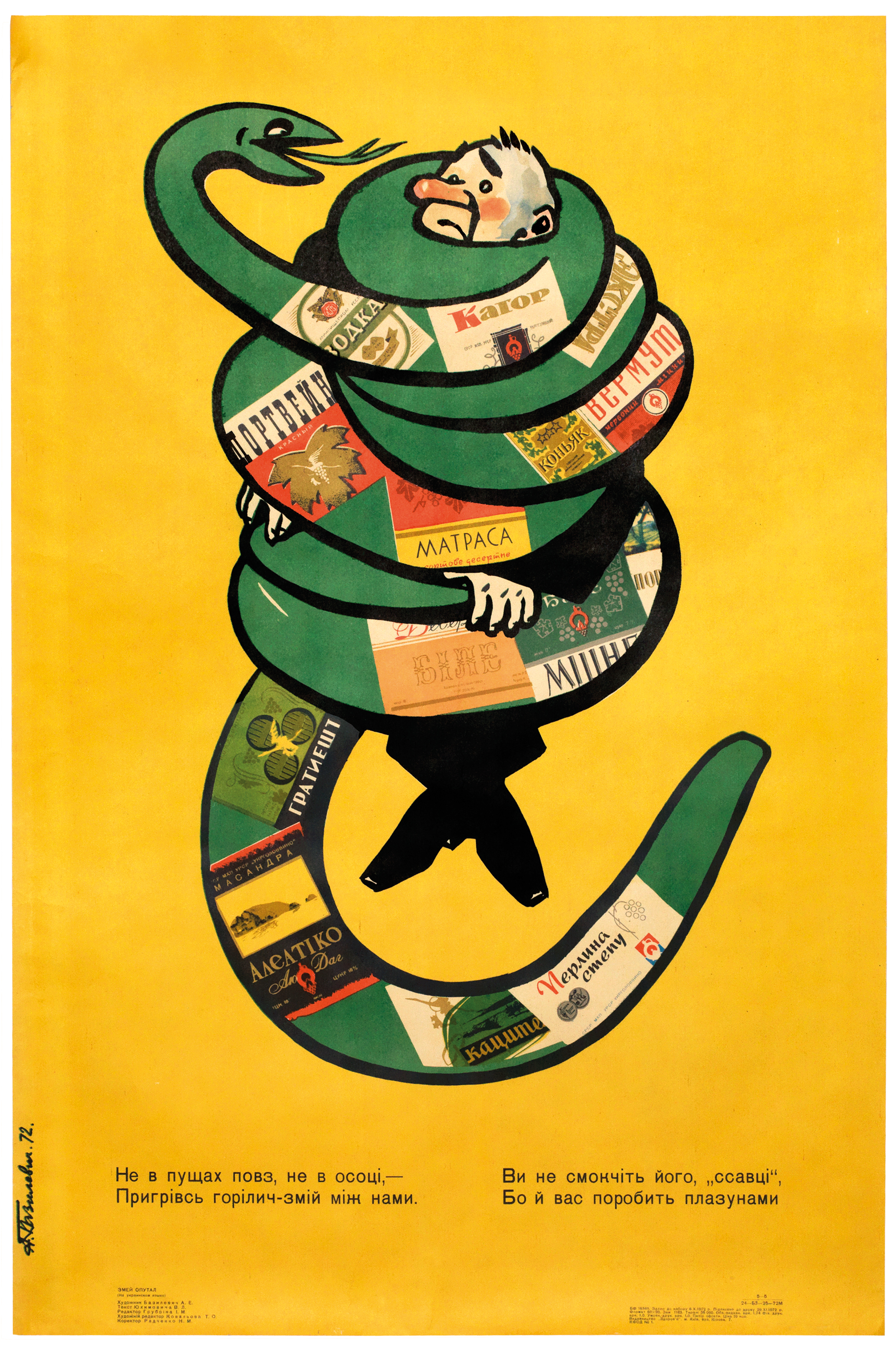
In 1985, newly elected General Secretary of the Communist Party, Mikhail Gorbachev, started the anti-alcohol campaign. This quick and intense campaign attempted to solve a problem that had been effecting Russia for hundreds of years: alcoholism. Today I want to give a little background of the problem, how it effected the Soviet Union both socially and economically, and why it eventually failed.
Drinking in Russia
It seems that whenever I think of Russia, Vodka always comes to mind. It is interesting how we make such a strong association between a country and a drink but there is a reason for it. Alcoholism has plagued Russia for quite some time. V. A. Bykov wrote an article about the problem in 1986. He spoke of eleven factors that he think set up society to be so inclined to drunkenness:
These eleven factors are mostly summed up with there being too much free time, not enough to do, no motivation to pursue a better career, and a system that tolerates misbehavior and does not reward good behavior. Bykov claims these are not reasons for drunkenness but how they almost pointed society towards a “tolerance” of it.
How it affects society
There are many ways that alcohol negatively affects society. In an article he wrote, I. Zakirov talks about how drunks are destroying parks and damaging property. A woman he interviews speaks of how she is scared to go to the park now that a liquor store opened up next to it. She claimed that the drunks would go to the liquor store and then go to the park and break bottles and trample down the flowers. Alcoholism also has adverse effects on the society due to what it does to people’s health. E. A. Babayan, an official of the USSR Ministry of Public Health, conducted a study that showed the average life expectancy for drunks was 55 years old, 20 years lower than the average life of any given individual. In 1982, 800,000 soviets lost their driver’s licenses due to drunk driving. In 1984, a study showed that 270,000 burning accidents happened due to drunkenness (Bykov). The Soviet Union also battled against tuberculosis during this time period. A large portion of medical spending was spent towards the research and treatment of tuberculosis. A study showed that drunks were 16 to 18 times more likely to get tuberculosis than those that did not drink. Tuberculosis was also much more severe for those that drank (Yu). I found article after article speaking of terrible stories of suicides, alcohol poisoning, and accidents due to drunkenness. Alcohol seemed to be taking over society (Yaskov).
Economic Effects
Not only did alcohol have a negative effect on society, it effected the economy as well. Alcohol plays a huge part in the Soviet economy. In 1979, more money was acquired from indirect sales tax on alcohol than was acquired from income tax (Geldern). However, alcohol hurt the economy just as much. Prof. B. M. Levin estimated that at least 1% of the entire Soviet workforce does not show up to work on any given day because of drunkenness. He also showed that productivity goes down around holidays, after paydays, and after weekends. If you do the math, there are more than eighty work days that have about a 15% to 30% decrease in productivity. This amounts to about 7 billion rubles a year just from low productivity. There are also a lot of indirect effects that drunkenness has on the economy. Costs such as repairing machinery damaged due to drunkenness, defective products, healthcare, education for their mentally challenged children, and even the expansion of law enforcement due to the rising rates of alcohol influenced crimes (Bykov).
The Ban
Gorbachev’s anti-alcoholism campaign went in to effect in 1985. It immediately funded the destruction and punishment of home-breweries, limited the places alcohol could be served, banned restaurants from serving alcohol before 2 p.m. and raised the drinking age to 21 years old (1985). The campaign also called for the opening of more rehabilitation clinics, and types of “drunk safe-zones” where drunks could go instead destroying property or going home to assault their wives and children (which was also a very big issue) (Fedotov). The ban saw initial success on paper with a 62.7% drop of state alcohol sales between 1984 and 1987. The death rate in the Soviet Union dropped for the first time in 20 years in 1985 and 1986. Statistics would say that during the five years the campaign was active, over 1 million lives were saved. However, the campaign did not last. Home breweries became more and more prevalent, and due to the illegal breweries, the 62% drop in state sales only equated to a 25% drop in consumption (Aleksandr) (Sidirov). This is still a huge deal, but it wasn’t enough. Gorbachev realized that to solve the issues of alcohol, he had to change society as a whole. The campaign bit off more than it could chew, and eventually it cost more money than it was worth (1986). So for the sake of a bad pun, raise your glass, and pour one out for Gorbachev and his valiant efforts at making Russia a better place.
Citations
A. Sidorov. (1985, February 13). ALCOHOL IS SOCIETY’S ENEMY: VILLAIN WITH NO STIGMA. Current Digest of the Russian Press, The . Retrieved from https://dlib.eastview.com/browse/doc/19987537
Aleksandr Nemtsov. (1993, October 6). DO PEOPLE DRINK A LOT IN RUSSIA?. Current Digest of the Russian Press, The . Retrieved from https://dlib.eastview.com/browse/doc/13615163
A. V. Fedotov. (1977, March 23). SOCIAL PROBLEMS IN THE STRUGGLE
AGAINST ALCOHOLISM. Current Digest of the Russian Press, The . Retrieved from https://dlib.eastview.com/browse/doc/13632020
(1985, June 12). IN THE CPSU CENTRAL COMMITTEE: ON MEASURES TO OVERCOME DRUNKENNESS AND ALCOHOLISM. Current Digest of the Russian Press, The . Retrieved from https://dlib.eastview.com/browse/doc/19988401
(1986, August 6). IN THE CPSU CENTRAL COMMITTEE’S PARTY CONTROL COMMITTEE.-ON SERIOUS SHORTCOMINGS IN IMPLEMENTING THE CPSU CENTRAL COMMITTEE’S RESOLUTION ON OVERCOMING DRUNKENNESS AND ALCOHOLISM IN THE BASHKIR AUTONOMOUS REPUBLIC. Current Digest of the Russian Press, The . Retrieved from https://dlib.eastview.com/browse/doc/19992672
Geldern, J. (2015, September 2). Anti-Alcohol Campaign. Retrieved from http://soviethistory.msu.edu/1985-2/anti-alcohol-campaign/
I. Yaskov. (1985, June 12). ALCOHOL IS THE ENEMY OF SOCIETY: DON’T STEP INTO THE ABYSS. Current Digest of the Russian Press, The . Retrieved from https://dlib.eastview.com/browse/doc/19988371
V. A. Bykov. (1986, February 12). SEEING THE PROBLEM IN ALL ITS COMPLEXITY. — SOCIAL FACTORS INFLUENCING DRUNKENNESS AND ALCOHOLISM. Current Digest of the Russian Press, The . Retrieved from https://dlib.eastview.com/browse/doc/19990862
Yu. Fisher. (1985, September 18). ALL TOGETHER AGAINST DRUNKENNESS: A TERRIBLE AILMENT. Current Digest of the Russian Press, The . Retrieved from https://dlib.eastview.com/browse/doc/19986995
I was pretty excited to see the Soviet–Afghan War in the event timeline for this week. The Soviet invasion of Afghanistan has always interested me and this made the perfect excuse to do some more research about it. What I found especially interesting was the similarities that this war had with the Vietnam war. I want to draw some comparisons between the two and then end with the effect that the Soviet-Afghan War had on the fall of the Soviet Union.
History
Afghanistan shared its southern border with multiple republics of the Soviet Union including Turkmenistan, Uzbekistan, and what is modern day Tajikistan. This being said, the Soviet Union thought it would be easy to support another communist government in Afghanistan due to its location. At the same time, the U.S. was gaining the support and creating allies with Egypt, Israel, Saudi Arabia, Pakistan, and other countries in the surrounding region. The Soviet Union was under massive pressure to not only preserve but also expand their influence in the Middle East and Southern Asia (Russia). I find this to be the first similarity between the Vietnam War and the Soviet-Afghan War. The U.S. was trying to stop the spread of communism and promote western democracy in Vietnam while the Soviet Union was trying to promote the spread of communism and stop the spread of western influence. Both were two major powers trying to promote their ideals in a smaller country and its surrounding region. I see this as the two sides to the same coin.
Nur Mohammad Taraki is a key player in the attempt to put Afghanistan under Soviet control. Taraki was a Afghani politician who helped create the People’s Democratic Party of Afghanistan (PDPA). This party had ties to Marxism and was heavily supported by the Soviet Union. Taraki gained the full support of the PDPA after a short division involving a coup by Mohammad Daud Khan, who gained the position of President in 1973. In 1977, Taraki used his growing support in the PDPA and help from soviet-trained army units to overthrow Khan and claim the titles of both President and Prime minister. However, Taraki quickly fell victim to civil unrest due to his extreme Marxist views concerning social reforms. An up and coming deputy prime minister, Hafizullah Amin, was also gaining back support in the PDPA. Taraki was stiff armed into naming Amin the Prime minister while he kept the position of President (Editors, July).
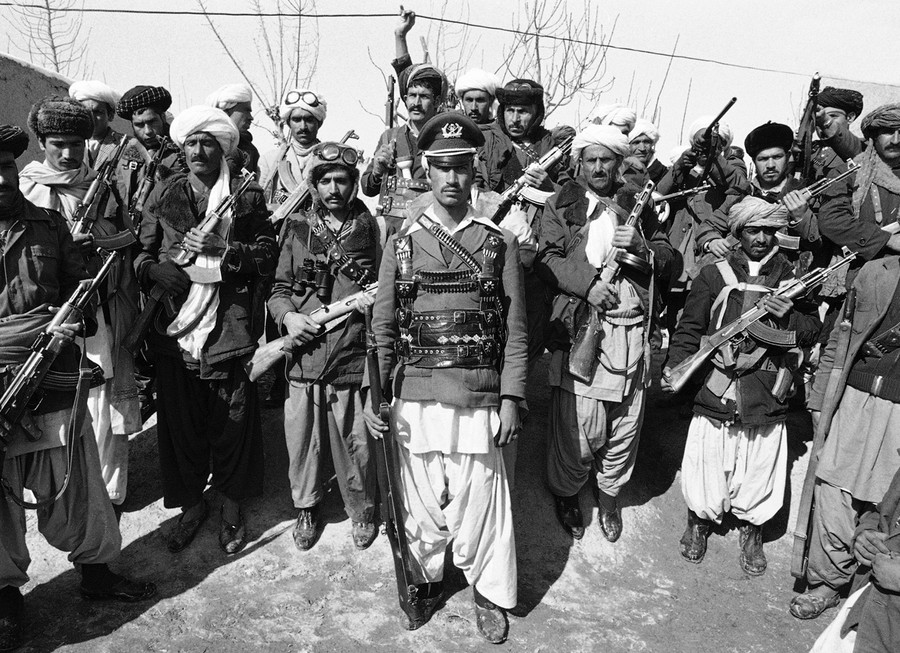
In 1979, it is rumored that Taraki was advised by Leonid I. Brezhnev to kill Amin because Amin was causing further civil unrest. Taraki’s assassination attempt failed and in turn, Amin had Taraki killed. At this point, the Afghan people had lost all faith and support for the PDPA, and civil unrest was at an all time high. Afghan rebels against the communist party formed what was called the Mujaheddin and declared jihad or “holy war” on Amin and any supporters of the communist party. The Soviet Union, seeing that it was quickly losing its grip on Afghanistan, launched a full scale military assault on the capital of Afghanistan to support the communist party (The Soviet).
The War
The initial invasion, which took place on December 24th, 1979, saw immediate success in gaining control of the capital city, Kabul. The Soviet Army launched an attack on the Tajberg Palace where they met resistance from a fraction of the Afghan army that still supported Amin. The resistance was short lived and Amin and his supporters were overthrown. Amin was killed and Babrak Karmal, a supporter of the Soviet Union took his place (The Soviet). I find this to be another similarity between the Vietnam War and the Soviet-Afghan War. The Soviets put a man with their backing into power just as the U.S. supported Ngo Dinh Diem to be the leader of Southern Vietnam. Both wars involved the major players placing a pawn into political power to support their agenda whether it be positive or negative. Karmal was not able to gain the support of the Afghan people, and more and more Afghans decided to join the Mujaheddin which at this point was an ever growing army of freedom fighters. The Soviet Union’s original plan was to support the Afghan army in gaining control over and regaining peace in Afghanistan. However, many soldiers from the Afghan army also joined the Mujaheddin. This required the Soviet Union to send more troops to Afghanistan to support the communist party (Editors, December).
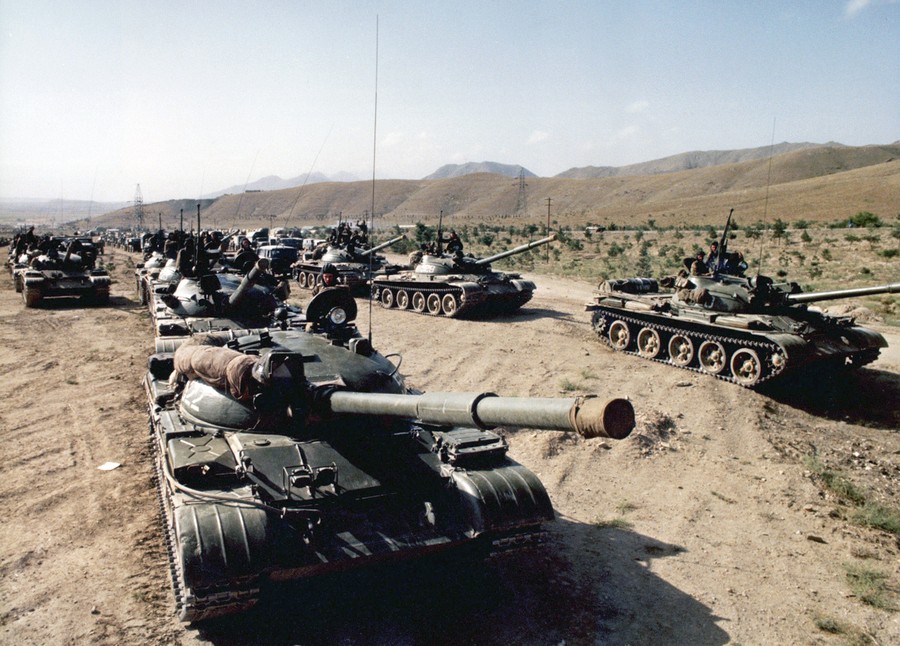
The original invasion consisted of about 30,000 Soviet Union soldiers. They were prepared with tanks, jets, and helicopters. What the Soviet Union was not prepared for, was their first real experience with guerrilla warfare. The Mujaheddin knew that they could not compete with the Soviet army in a tank on tank style level, nor did they have the means to do so. Therefore, the Mujaheddin forces resorted to small, quick attacks on unsuspecting Soviet forces. The Mujaheddin attacks were swift and deadly, and the freedom fighters would disappear just as fast as they appeared. They set up camps in small villages and in mountains where the Soviet forces could not chase them. These unconventional tactics proved to be detrimental to the Soviet armies (The Soviet). The Soviet Union experienced the same issues the U.S. soldiers did in Vietnam. Neither army was prepared to fight such an unconventional force.
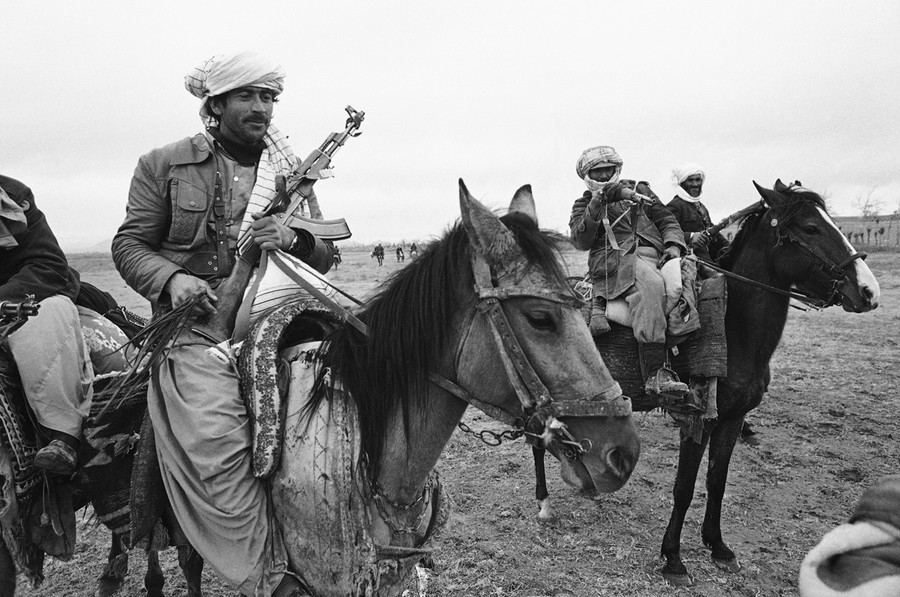
The Soviet Union ended up sending more than 100,000 troops to Afghanistan to combat the Mujaheddin and try to stabilize the country. However, all this did was hurt the Soviet Union’s reputation. The world looked at the Soviet Union as a bully, and the Mujaheddin started to gain support from all over the world. People from Pakistan, Saudi Arabia, Iran, China, Egypt and other countries either joined the Mujaheddin in the fight or financially supported it. Afghanistan gained the sympathy of the entire Muslim nation, and the war gained a huge following on a global scale (Russia). This reminds me of Landry Henderson’s post last week titled “State of Play: Soviet Olympic Dominance.” This was a great read and I suggest if you haven’t read it that you do so (I will put the link to his blog post below). In his blog, Landry talks about how politics seeped into the Olympics and how the Lake Placid games were much more than just sports. It made me think of the scene from the movie “Miracle” about the U.S. defeating the Russian hockey team at Lake Placid. During the game, the camera pans towards the crowd and some U.S. fans drop a banner that says “get the puck out of Afghanistan.” This is a funny and helpful example of the sympathy that Afghanistan was gaining all over the world.

Just as the U.S. started to lose support for the Vietnam War, the Soviet Union did as well. Both invasions were met with stiff resistance both physically and politically. The American citizens practically turned against their own soldiers and treated them poorly after returning from war. The Soviet Union was experiencing the same reaction within its own borders.
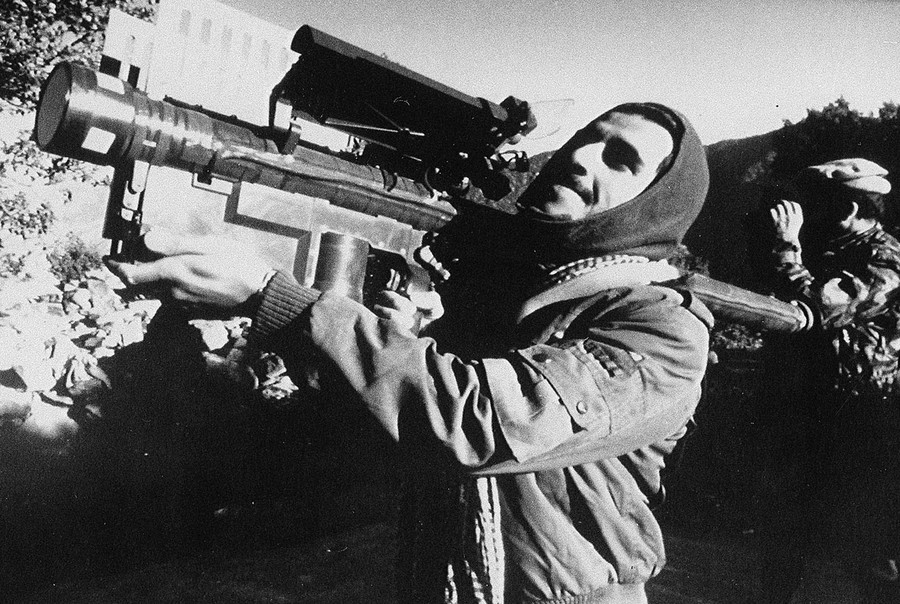
Still licking its wounds from Vietnam, the U.S. refrained from putting “boots on the ground” in Afghanistan and instead supported the Mujaheddin with money and weapons. A huge turning point in the war was the Mujaheddin acquiring “stingers” from the U.S. military. These anti-aircraft rocket launchers gave the Mujaheddin the opportunity to counter low-flying Russian aircraft including bombers, MIG-17’s and support helicopters. Reports say that the Mujaheddin downed one Russian aircraft a day during the conflict (The Soviet).
The End of the Conflict
The conflict came to a standstill in the mid to late 80’s. The Soviet Union had control of most major cities and highways while the Mujaheddin ruled the rural areas and mountains. The Russians threw everything they had at the resistance fighters including napalm and they even randomly bombed villages to try to draw the Mujaheddin out of hiding. All this did however was waste more money and continue to worsen relationships between the Soviet Union and its surrounding countries. The U.S. withdrew their ambassador from Russia, cut trade ties, created sanctions on Russian products, and strengthened its alliances in the Middle East and Asia. The Soviet Union was losing the support of its allies (The Soviet). The war ended up being something that the Soviet Union would never recover from. Billions of dollars were spent during the war and the Soviet Union had nothing to show from it (History). Ties between the U.S. and the Soviet Union were never truly mended, and the Soviet Union started to fall apart. The Soviet-Afghan War turned into the same type of war as the Vietnam War. Two large countries both entering smaller countries to either promote or destroy communism. Both sending more troops that originally planned. Both spending more money than planned. Both losing the support of their own nation during the war, and both ended up being routed by a much smaller guerrilla force.
I know I come off as someone that did not support the Vietnam War but I actually do. That, however, is a conversation for another day.
Citations
History. (2009, November 24). Soviet Union Invades Afghanistan. Retrieved from https://www.history.com/this-day-in-history/soviet-tanks-roll-into-afghanistan
Russia and Afghanistan. (n.d.). Retrieved from http://www.understandingwar.org/russia-and-afghanistan
Taylor, A. (2014, August 4). The Soviet War in Afghanistan, 1979 – 1989. Retrieved from https://www.theatlantic.com/photo/2014/08/the-soviet-war-in-afghanistan-1979-1989/100786/
The Editors of Encyclopaedia Britannica. (2019, December 4). Soviet invasion of Afghanistan. Retrieved from https://www.britannica.com/event/Soviet-invasion-of-Afghanistan
The Editors of Encyclopaedia Britannica. (2019, July 11). Nur Mohammad Taraki. Retrieved from https://www.britannica.com/biography/Nur-Mohammad-Taraki
The Soviet invasion of Afghanistan. (n.d.). Retrieved from https://www.bbc.co.uk/bitesize/guides/ztb8y4j/revision/6
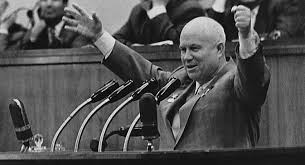
If you were a politician during the reign of Stalin, Nikita Sergeyevich Khrushchev would be no stranger to you. Khrushchev was a heavy advocate for agricultural reform during Stalin’s reign. It was well known that Khrushchev did not agree with the way Stalin was handling the economy. Khrushchev thought that too much money was being spent on the military and the industrial sectors of the economy and that the Russian Federation would eventually regret not investing more in agriculture (Vilon). To emphasize how passionate Khrushchev was about agriculture, at one point during Stalin’s reign, Khrushchev was a Ukrainian party secretary. During his time in office, he received an unrealistic request for grain from Stalin that would put too much stress on Ukraine’s grain production. Khrushchev denied Stalin his request, and in turn did not buy himself any favors in the political spectrum. Nonetheless, Khrushchev once again found favor in the eyes of the people after Stalin’s death (Freeze).
All this being said, it was no surprise that Khrushchev built his campaign for First Secretary of the Central Committee off of his plans for economic reform. Khrushchev’s attempt at agricultural reform was not gradual or risk free. His plan was to “increase agricultural production sharply and as rapidly as possible” (Vilon) This meant that Khrushchev took big risks in order to boost agricultural production. One of these risks was the Virgin Lands Campaign. The objective of The Virgin Land campaign was to immediately increase the amount of farmland in the Russian Federation and in turn create a larger infrastructure built off of grain production. With the majority of the Federation’s grain coming from these virgin lands, Ukraine would be able to focus on corn production. Ukraine being able to produce more corn would be very important later on (Siegelbaum). This campaign was met with heavy resistance in the Central Committee. Many members were still leaning towards boosting and relying on heavy and light industrialization. Many people thought that the agricultural infrastructure was fine and that industrialization would in turn help the agricultural aspect of the economy in time.
After much discussion and back and forth, Khrushchev eventually wore down the committee and in 1954, the Central Committee signed off on the Virgin Land operations. 19 million hectares (the equivalent of about 47 million acres) was immediately plowed. Most of the land that was plowed was in northern Kazakhstan and the Altai region. Over 300,000 workers were brought in to cultivate the land and many more were shipped in every new season (Siegelbaum). These workers came from multiple different republics of the Russian Federation. Initially, the Virgin Land operation did not seem successful. The harvest in 1955 left much to be desired, but this did not discourage or slow down Khrushchev. That year, 14 more hectares were plowed, and once again, swarms of workers were brought in from all over to work the crops. Khrushchev got a taste of success in 1956, with the largest amount of grain produced the Russians had ever seen. More than 125 million tons of grain was produced, and more than half of this came from Khrushchev’s virgin lands (Siegelbaum).

Khrushchev was not only concerned with the shortage of grain production in Russia, but he was also concerned with the lack of livestock. He said, “There will be no communism if our country has as much metal and cement as you like but meat and grain are in short supply.” This being said, Khrushchev set out to solve the livestock problem. Khrushchev realized that for there to be livestock, there has to be feeder, and corn was the most effective feeder at the time. Going back to what I said earlier, the Virgin Land campaign allowed Ukraine to focus on corn production. Khrushchev used every resource he had available to fix this “corn shortage.” Seed corn was imported from the United States, a corn research institute was opened in Ukraine, and Ukraine more than tripled its acreage used to plant corn. Khrushchev’s sudden efforts to increase corn production seemed to pay off (Gelden). The resources he used combined with good weather during the first few years created a surplus of corn in the Russian Federation. Khrushchev began to be referred to as “Kukuruzshchik” or “kukuruznik” which means “Mr. Corn” or “the maize enthusiast” (Pike). It seemed as of Khrushchev had pulled off the impossible. Within three years, grain and corn production was at an all time high and livestock began to prosper because of it.
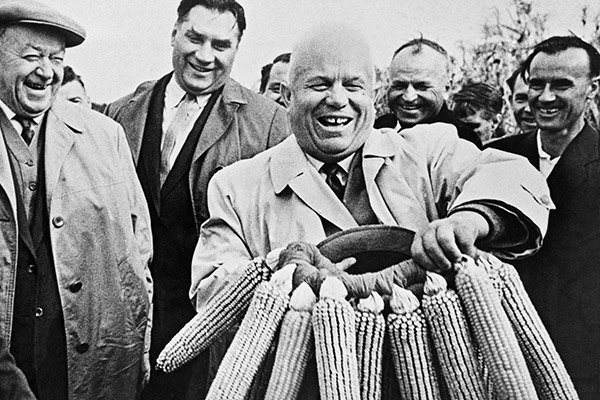
Although everything seemed to be going good for Khrushchev, the “high-risk” portion of his plans ended up coming back around to bite him. It would seem that relying solely on the sheer amount of acreage dedicated to corn and grain would end up costing Khrushchev much more than he anticipated. Unfavorable weather including droughts in 1956, harsh freezes in 1959, and random weather changes in the early 60’s would lead to a deterioration of Khrushchev’s reputation. Lack of investment in good fertilizer, proper harvesting machinery, and a shortage of storage all led towards a very disappointing harvest in 1963 (Pike). Khrushchev was already losing political support over some of his policies and civil unrest, his economic success seemed to be the only thing keeping him afloat. This being said, the harvest of 1963 did not meet the needs of the Russian Federation and thus Khrushchev’s time as the Head of the Central Committee came to an end (Freeze). To end on a more positive note however, Khrushchev’s crops saw a major boost the next year in 1964 and it ended up being the largest harvest since the birth of his Virgin Land operation. Khrushchev’s agricultural feats were celebrated for decades to come (Pike). (See a stamp of the 25th anniversary of the Virgin Land Campaign below.)

Citations
Freeze, G. L. (2009). Russia: a history. Oxford: Oxford University Press.Geldern,
Geldern, J. von. (2017, June 18). Corn Campaign. Retrieved from http://soviethistory.msu.edu/1961-2/corn-campaign/
Pike, J. (n.d.). Military. Retrieved from https://www.globalsecurity.org/military/world/russia/cccp-ag-khrushchev.htm
Siegelbaum, L. (2015, September 1). Virgin Lands Campaign. Retrieved from http://soviethistory.msu.edu/1954-2/virgin-lands-campaign/
Volin, L. (1959). Soviet Agriculture under Khrushchev. The American Economic Review, 49(2), 15-32. Retrieved April 19, 2020, from http://www.jstor.org/stable/1816099
Watkins, T. (n.d.). The Virgin Lands Program in the Soviet Union under Nikita Khrushchev. Retrieved from https://www.sjsu.edu/faculty/watkins/virginlands.htm

The picture shown above is that of the last Emir of Bukhara, Said Mir Mohammed Alim Khan. Alim Khan is a direct descendant of Genghis Khan and the last member of the Khan family to rule a territory. The photo was taken by Prokudin Gorskii in 1911 when he traveled to the Emirate of Bukhara which is modern day Uzbekistan. The Emirate of Bukhara was a protectorate of the Russian Empire which allowed Alim Khan access to a proper military and political education in St. Petersburg. Alim Khan returned to Bakhara at the age of 16 in order to help his father govern the Emirate. Alim Khan’s father dies in 1910 and Alim became the Emir of Bakhara in 1911, the same year that Prokudin Gorskii visited the Emirate.
Alim Khan started his rule with the intentions of reforming the traditional ways of Bukhara with an emphasis on political reform. Bribes, unnecessary taxes, and unjust laws created by the administration were common throughout Bukhara’s government. This “traditional” type of government was something that Alim Khan wanted to change. He stopped taking bribes and “gifts” and forced his administration to do the same. He also got rid of certain taxes that the previous administration had created. While he pushed for reform in government, he also reinstated more traditional laws such as the harem system which allowed him to house over 100 wives. Whether it was caused by his back and forth between modern reform and traditional laws and social norms, or just the changing of the times, Alim Khan quickly found himself in the middle of a revolution.
The revolution between the reformists and the traditionalists escalated quickly with the traditionalists eventually exiling the reformists to Kazan and Moscow. This actually helped Alim Khan in the short run because he was forced to pick the traditionalist side. This being said, Alim Khan’s attempt at reform, failed. He was not able to convince the people and gain their trust. The people saw Alim Khan as a man that was trying to take away the strength and power of traditional morals. Although Alim Khan got to keep his throne for a little longer due to him siding with the traditionalists, the reformists were far from giving up. The reformists gained the support of the Bolsheviks, and the Bolsheviks attempted to assault Bukhara in 1918 with a small portion of the Red Army. Due to the Russian Revolution, the Red Army was untrained and spread very thin. This led to an absolute route in Bukhara as Alim Khan defended his territory and then slaughtered multiple known reformists in Bukhara to send a message to his followers that he was fully supportive of the traditionalist movement.
Alim Khan was allowed to revel in his victory and power from the comfort of his throne for the next two years. However, once the Russian Revolution died down, Russia looked to Bukhara once again. This time, with much more force, the Red Army marched upon the Ark of Bukhara and topped the stronghold within four days. Alim Khan was forced into hiding, eventually settling in Kabul Afghanistan. The takeover of Bukhara was a turning point in region. Traditional values were being toppled over by the Russians as their power grab continued throughout central Asia.
Picture Credits: https://content.wdl.org/603/thumbnail/1430159399/616×510.jpg
Reference: Butler, R. (2016, March 8). The Last Khan. Retrieved from http://our- russia.com/08032016231921/last-khan

 Jake's Blog


